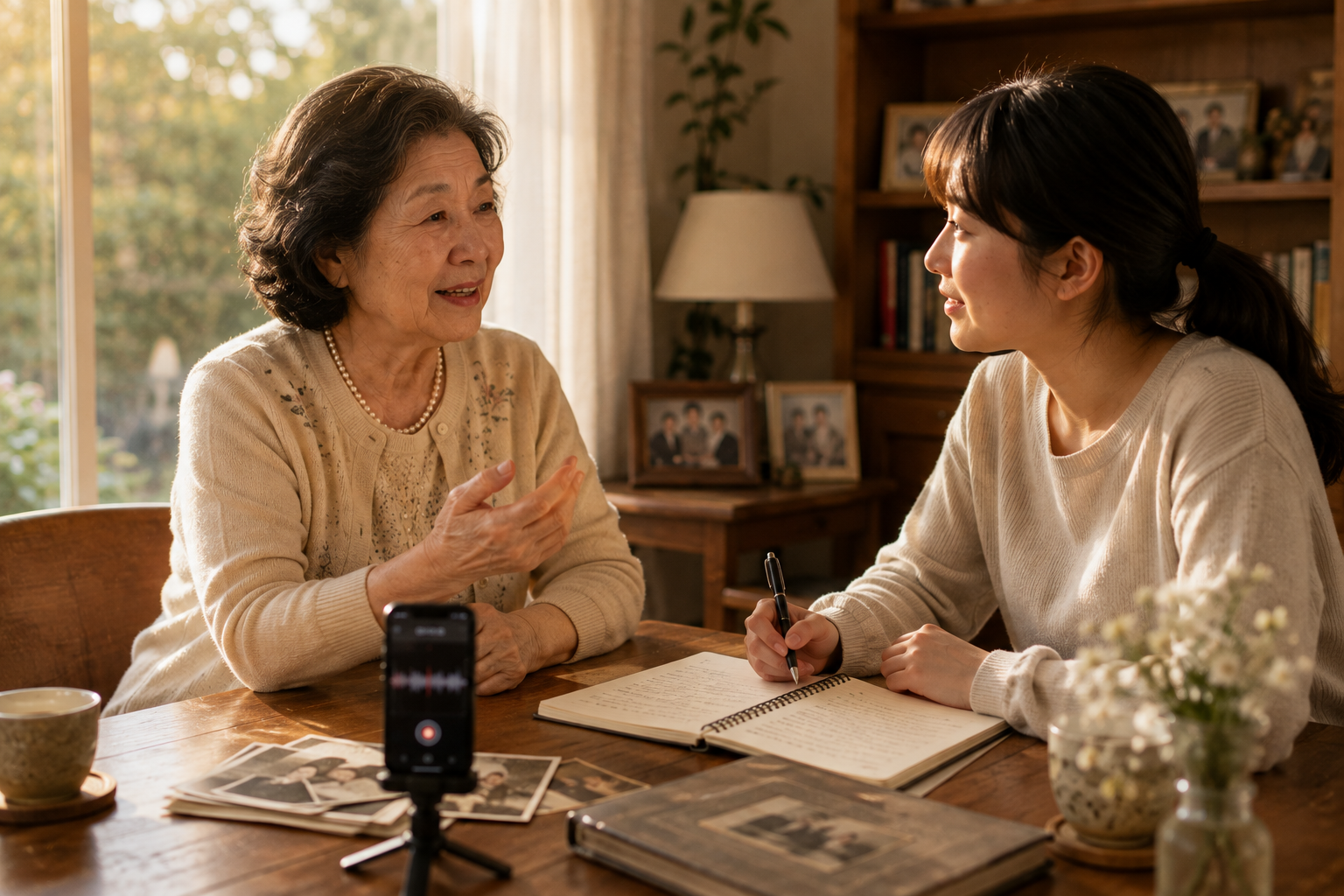
How to Preserve Family Memories (Before They're Gone) How do you preserve family memories? The most important step is to record the stories behind your photos, objects, and family traditions — not just the things themselves. Sit with the people who still remember. Ask questions. Write the answers down. Save photos with names. Record voices. Store everything in one place future generations can actually find. --- My grandmother, Dadi, came to England in 1972. She brought one suitcase. Inside: three saris, a tin of spices, a stack of letters tied with string, and a photograph of a house she never saw again. For thirty years, she never spoke about it much. We thought she was private. We were wrong. She was waiting for someone to ask. When I finally asked — the year before she died — she talked for three hours. About the house. About the neighbors. About the smell of her mother's kitchen. About the crossing. About the first winter. About my grandfather's laugh. I recorded all of it on my phone. Nothing special. Just her voice, the sound of tea being poured, a clock on the wall. That recording is the most valuable thing I own. Not because it's polished. Because it's real. And it almost never happened. --- How to Preserve Family Memories There's no single right way. But there is a right order. 1. Start with people, not things Photos fade. Objects break. The person who remembers the story behind them is the one you cannot replace. Before you organize a single album, sit down with the oldest person in your family. Ask them something you don't know. Record it. 2. Preserve the photos — with their stories Scanning photos is the easy part. The hard part is knowing who's in them. For every photo you digitize, write: - The names of everyone pictured - The approximate year - What was happening that day - Who took it, and why A photo without context becomes a mystery in one generation. A photo with names and a story becomes a gift. 3. Record voices before you lose them You don't need a microphone. You need a phone and permission. Ask: "Do you mind if I record this?" Almost no one says no. A voice carries what writing can't: the accent, the laugh, the way someone says a name. 4. Save recipes with the story behind them The measurements can be copied. The reason the dish exists cannot. Who taught it? When is it made? What family story belongs with that meal? 5. Build one archive — not twenty folders Most families don't lose memories because they forget. They lose them because the photos are on three phones, the stories are in someone's head, and no one knows where the old letters went. A digital family archive brings everything together: photos, stories, voices, and the names that connect them. --- A Note from Homeriah Preserving family memories doesn't require a project. It requires a conversation. One question. One story. Written down. Saved somewhere it won't disappear. That's how it starts. --- Start Tonight Think of one story from your family that you've never written down. A place someone came from. A decision that changed everything. A person nobody talks about anymore. Call someone who might know it. Ask. You have tonight. --- Memory Prompt Choose one memory — yours or a family member's. Write it down in three sentences: what happened, who was there, and why it still matters. Save it somewhere your children will find it. That's one family memory preserved. Do it again tomorrow.
8/2/2026